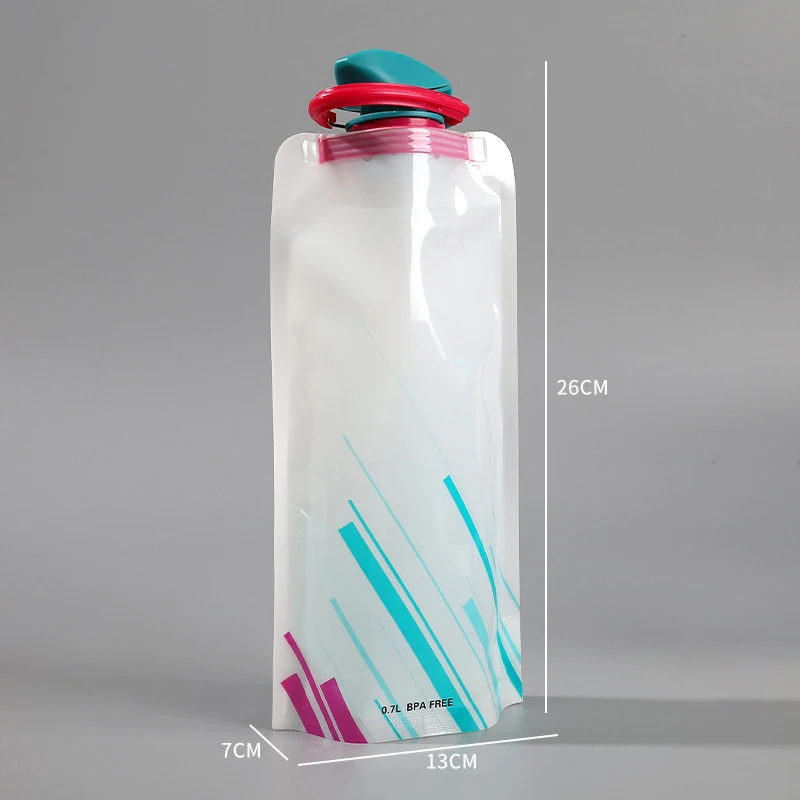
A collapsible water bottle is genuinely better than a rigid one in some situations and worse in others. I want to be upfront about that: there is no universally correct answer here. A rigid stainless steel bottle wins if you're filling it from a stream on a multi-day hike, if you need to keep things cold for eight hours, or if you're clumsy and drop things.
But most people asking this question are not multi-day hikers. They're people with a regular life that involves commutes, travel, gyms, and the occasional weekend trip, and they want to know which bottle they'll actually use.
That's a different question. Here's an honest answer.
Where rigid bottles are better
Temperature retention is the obvious one. A double-walled stainless steel bottle keeps cold drinks cold and hot drinks hot for hours. Foldable silicone does neither. Fill it with ice water and it'll be room temperature within an hour. If that matters to you, a rigid bottle wins this category completely.
Durability under actual abuse is the other one. Stainless steel survives being dropped, kicked, left in a hot car, and knocked off a table. Good silicone is tough but not indestructible. If you're rough with your gear, rigid is safer.
And for anything involving filtration, like a Sawyer squeeze system or similar backcountry water treatment, you need a bottle designed to work with that system. Most foldable bottles aren't.
Where a Collapsible Water Bottle Wins
Every situation where you have to carry the bottle when it's empty.
That sounds narrow but it covers a surprising amount of daily life. Flying (through security empty, fill after). Commuting (takes no space in a bag that's already full). Day trips where you'll drink it all and then have hours of sightseeing left. Any time you're packing light.
The other thing foldable bottles do better is the "I almost didn't bring it" scenario. The rigid bottle gets left behind when the bag is full or the trip feels too short to bother. The foldable one comes anyway because the cost of bringing it is close to zero. Over a year, this means more uses, fewer moments of buying bottled water, and the whole point of owning a reusable bottle actually achieved.
The real-life use case split
Think about where you actually drink water during a week:
If most of it is at a desk, in a gym, on a long hike, or anywhere you bring the bottle full and drink it there, a rigid bottle is probably better suited to your life. You don't need it to collapse; you need it to insulate.
If most of it is in transit, at airports, on trips, or in situations where the empty bottle is more of a problem than the full one, a foldable bottle will get used more and therefore do more good.
A lot of people end up owning one of each. The stainless bottle lives at the desk. The foldable one lives in the travel bag, always there, never taking up space it doesn't have. That split works well in practice. You're not choosing one forever — you're choosing the right tool for the context. And for anything involving a bag that's already full, the collapsible one wins by default.
The quality question
This is where it's worth being careful with foldable bottles specifically. The category ranges from well-designed products using proper food-grade silicone to cheap versions that taste like the factory they came from and develop leaks after six weeks.
What to check: food-grade silicone labelling (not just "BPA-free," which tells you what isn't in it but not what is), a proper sealing cap rather than a push-pull spout, and reviews that specifically mention long-term use rather than just unboxing impressions.
The price range for a good one sits between €5 and €25. Below that, corners are being cut somewhere. Above €25, you're mostly paying for brand name.
So which one?
If you travel, commute, or have ever left your water bottle at home because it was too bulky: foldable.
If you spend most of your time in one place and care about temperature: rigid.
If you want to stop buying airport water and have tried keeping a regular bottle in your bag and it doesn't stick: definitely foldable. The reason it doesn't stick is the size of the empty bottle, and that's exactly what a collapsible one fixes.
FAQ
Can you put a foldable bottle in a dishwasher? Most food-grade silicone bottles are dishwasher safe on the top rack. Check the specific product, but in general, yes. It's one of the easier bottles to keep clean because you can turn it inside out to wash it properly.
How long does a silicone foldable bottle last? With normal use, a good one lasts several years. Silicone doesn't corrode, rust, or absorb odors the way plastic can. The most likely failure point is the cap seal rather than the bottle itself, so the cap quality is worth checking when you buy.
Is a foldable bottle okay for carbonated drinks? No. Silicone bottles aren't designed to hold pressure. The CO2 in sparkling water or soft drinks will push against the walls in a way that can loosen the cap. Stick to still water.
What size should I get? 600ml is the most practical size for most people. It's enough water to matter, small enough to fold into something compact, and a standard size that refills easily from most taps and fountains. If you're using it specifically for hiking, 1L options exist, though they fold down larger.
Where can I buy a collapsible water bottle in Spain with fast delivery? Divi ships across Spain with delivery in 2 to 4 days. The bottle is 600ml, food-grade silicone, with a carabiner clip and a screw-top seal.